



Lowland Calcareous Grassland Seed Mix
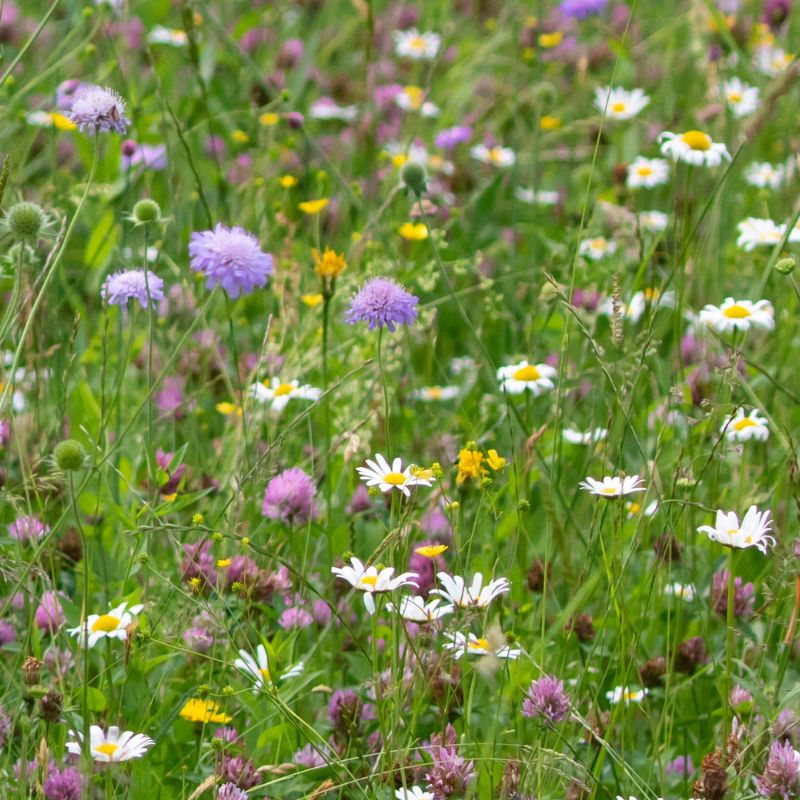
This wildflower seed mix has been developed to support the creation of lowland calcareous grassland habitat (g2a) on free-draining, lime-rich soils such as chalk and limestone downland, slopes, and unimproved calcareous pastures. The mix is dominated by characteristic calcicolous wildflowers and fine, low-vigour grasses, making it well suited to long-term grassland restoration and Biodiversity Net Gain delivery. Species selection has been informed by NVC CG-series calcareous grassland communities.
The mix performs best under light grazing or low-intensity cutting. Final vegetation will vary depending on soil depth, fertility and management, with optimal results achieved where nutrient inputs are avoided and long-term low-intensity management is maintained.
✅ BNG-compliant
✅ Ideal for chalky and limestone soils
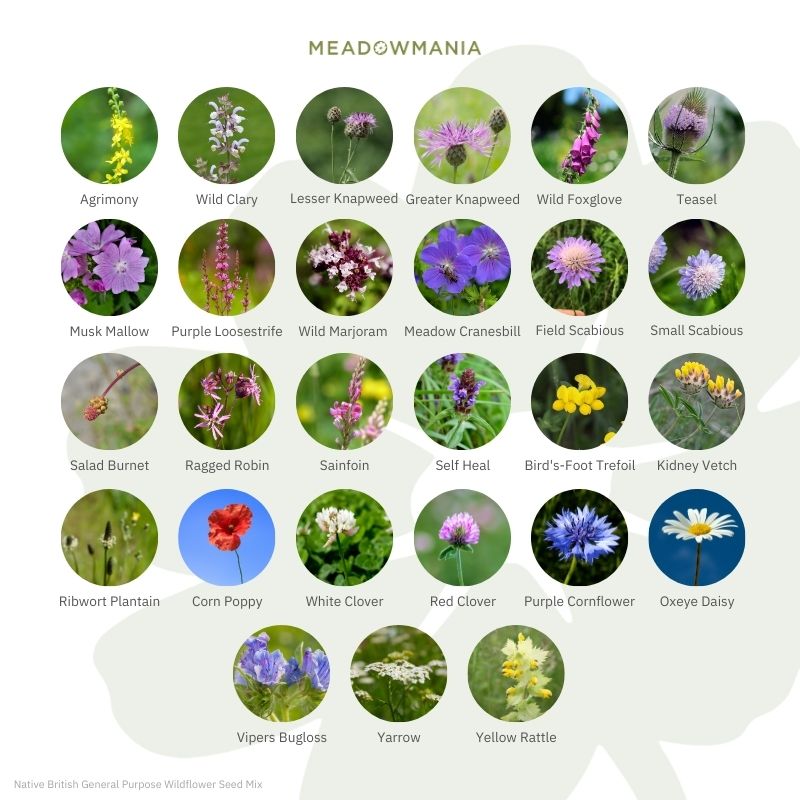
✅ 27 indicator species
Wildflower Species
- Agrimony - Agrimonia eupatoria
- Betony - Betonica officinalis
- Bird's-foot trefoil - Lotus corniculatus
- Burnet saxifrage - Pimpinella saxifraga
- Clustered bellflower - Campanula glomerata
- Common rock rose - Helianthemum nummularium
- Common knapweed - Centaurea nigra
- Cowslip - Primula veris
- Dropwort - Filipendula vulgaris
- Devil's bit scabious - Succisa pratensis
- Eyebright - Euphrasia officinalis
- Field scabious - Knautia arvensis
- Greater knapweed - Centaurea scabiosa
- Hairy violet - Viola hirta
- Harebell - Campanula rotundifolia
- Hoary plantain - Plantago media
- Horseshoe vetch - Hippocrepis comosa
- Kidney vetch - Anthyllis vulneraria
- Lady's bedstraw - Galium verum
- Wild marjoram - Origanum vulgare
- Mouse-eared hawkweed - Pilosella officinarum
- Oxeye daisy - Leucanthemum vulgare
- Common restharrow - Ononis repens
- Rough hawkbit - Leontodon hispidus
- Salad burnet - Poterium sanguisorba subsp. minor
- Wild thyme - Thymus drucei
- Dwarf thistle - Cirsium acaule
Grasses (6–8 species):
- Sheep’s fescue - Festuca ovina
- Upright Brome - Bromopsis erecta
- Yellow oat grass - Trisetum flavescens
- Tor grass - Brachypodium pinnatum
- Quaking grass - Briza media
- Hairy oat grass - Avenula pubescens
Note:
- This mix is ideal for chalky and limestone soils — avoid on neutral or acidic substrates.
- Many of these species are slow to establish but highly persistent and rewarding.
- Yellow Rattle (Rhinanthus minor) may be used if grass suppression is desired, though it’s less dominant on very thin calcareous soils.
- This mixture can be modified by adding or subtracting species.