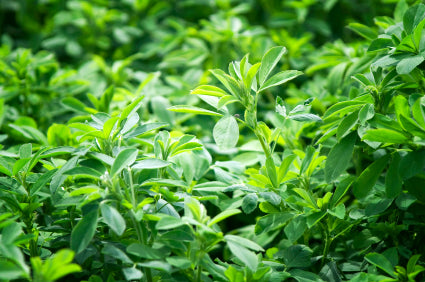
Alfalfa, also known as lucerne, is a deep rooting green manure with vigorous roots that help to break up compacted soil and draw minerals up from deep below the surface. It is particularly well suited to drought prone soils and improves both soil structure and fertility.
As a member of the legume family, alfalfa fixes nitrogen from the air in its root nodules. This nitrogen is released back into the soil when the plants are dug in, making it an excellent green manure to grow before nitrogen hungry crops such as brassicas. It also adds valuable organic matter to the soil.
Alfalfa should be sown between April and July and grows best in free draining soils. It does not tolerate waterlogged or acidic conditions but will overwinter once established and can be grown for several months or up to one year. For best results, it should be cut down before flowering and dug into the soil while still fresh and green.
How to sow
Prepare the soil by digging it over and removing weeds. Firm the soil by treading it lightly, then broadcast the seed evenly. Rake over the surface and water well. In dry conditions, additional watering may be required.
How to dig in
Chop the green manure into small pieces using a spade and turn it into the top 10 to 12cm of soil. Alternatively, cut it down and leave the clippings on the soil surface, covering them to exclude light using cardboard and grass cuttings or a biodegradable ground cover. Leave for at least six weeks to allow the material to break down and be incorporated into the soil by earthworms.